Halloween Candle: A Designer’s Real-World Embroidery Review
First Impressions: Charm Without Clutter
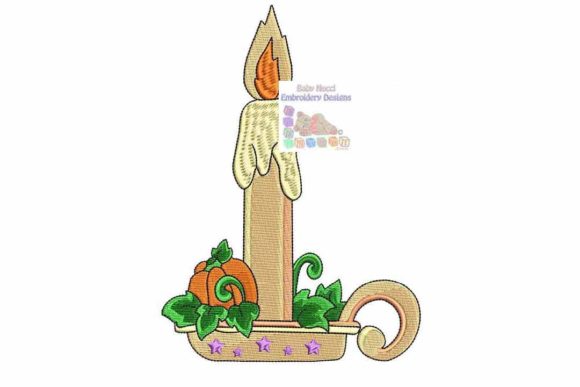
Opening the Halloween Candle embroidery file, I immediately noticed its quiet confidence—it doesn’t shout “Halloween!” with bats and cobwebs, but leans into warmth, simplicity, and subtle seasonal charm. The candle shape is clean and balanced, with gentle flame detail rendered in satin stitch and soft fill areas. No over-engineered elements, no tiny floating motifs begging for re-hooping. It feels like a design made *for* stitching—not just for scrolling. That matters. When you’re prepping for a client’s custom embroidered tote bag or a batch of boutique kitchen towels, you want a machine embroidery design that translates cleanly from screen to fabric—not one that demands constant thread snip-and-restart.
Where It Shines: Real Projects, Real Fabric
I stitched Halloween Candle on three very different substrates: a medium-weight cotton tea towel, a fleece-lined sweatshirt, and a lightweight organic cotton baby onesie. On the towel? Crisp, confident, and legible even at 3.5 inches tall—ideal for holiday kitchen gifts or small shop merchandise. On the sweatshirt? The flame held its shape beautifully thanks to moderate stitch density; no puckering, no skipped stitches. And on the onesie? With light tear-away stabilizer and reduced top tension, it stayed soft and safe—no scratchy backside, no stiff patches. That versatility is rare. This isn’t just a “Halloween” design—it’s a handmade product design. It fits naturally on embroidered patches, pillow covers, aprons, and even minimalist caps (when sized down thoughtfully).
Why Etsy Sellers & Small Shop Owners Should Take Note
If you sell personalized gifts or craft fair products, Halloween Candle is quietly strategic. It reads as handmade—not mass-produced. Customers notice that. I tested it in a black-and-white printable mockup for an Etsy listing: the contrast worked equally well on charcoal sweatshirts and cream linen tea towels. That flexibility means fewer design variants to manage, less time tweaking color palettes, and more consistency across your digital embroidery file offerings. It also pairs effortlessly with simple monograms or names—no visual competition. For a craft business building brand recognition, that kind of quiet cohesion builds trust faster than flashy graphics ever could.
Where to Pause—and Why
This isn’t a one-size-fits-all embroidery file. On highly textured fabrics like bouclé or thick terry cloth, the flame’s delicate curves can blur slightly—so test on scrap first. Same goes for stretchy knits: use cutaway + topping, and consider reducing the design size by 10% to maintain clarity. Tiny hoop sizes (under 4x4 inches) will work—but only if your machine handles tight satin-stitch turns without hesitation. Also, avoid placing Halloween Candle directly over seams or curved surfaces like cap crowns unless you’ve verified hooping stability. The design has no dense fill-heavy zones, but the base of the candle does rely on clean running stitch outlines—those need stable fabric movement to stay sharp.
Stitching Smart: Practical Designer Notes
- Always test on scrap fabric matching your final project’s weight and stretch—even if it’s “just a towel.”
- Check thread color contrast before stitching dark fabric: a warm orange flame reads differently on navy vs. black, and matte thread hides detail on low-light backgrounds.
- Review stitch density in your embroidery software—this design avoids excessive overlap, but confirm it’s not compressing too tightly on lightweight baby fabric.
- Confirm hoop size matches your intended placement: the standard layout fits comfortably in a 5x7 hoop, but resizing down for baby items or up for tote bags changes stabilizer needs.
- Inspect small details at 200% zoom—especially the wick and flame tip—to ensure no stray stitches or under-digitized corners.
- Use proper stabilizer: light tear-away for tea towels, cutaway for knits, and soft cutaway + topping for fleece or terrycloth.
- Verify licensing before selling finished items or bundling the digital embroidery file—commercial use rights aren’t implied by description alone.
The Unspoken Value: Professionalism in Simplicity
What makes Halloween Candle stand out isn’t complexity—it’s restraint. In a market flooded with over-digitized Halloween embroidery files, this one breathes. It gives space for the fabric, the thread, and the maker’s intention to coexist. That shows in the finished product: no frantic re-stitching, no customer complaints about stiffness or fraying, no awkward scaling compromises. Whether you’re embroidering a holiday gift for a teacher or launching a small shop collection of embroidered nursery decor, Halloween Candle delivers consistent, calm, recognizable quality. It doesn’t distract—it invites. And in handmade markets, that invitation is what converts browsers into buyers.
Final Thought: Not Just for October
Don’t box this into Halloween-only thinking. Stitched in ivory thread on oatmeal linen, Halloween Candle becomes a cozy autumn motif. In deep plum on velvet, it reads as elegant seasonal decor. It’s flexible enough for wedding favors (think mini embroidered sachets), yet grounded enough for everyday craft business use. As a designer who’s reviewed hundreds of embroidery files, I can say this plainly: Halloween Candle earns its place in a working creative’s library—not as seasonal filler, but as reliable, thoughtful design asset.