Shell Embroidery Design Review
First Impression: Coastal, Clean, and Quietly Confident
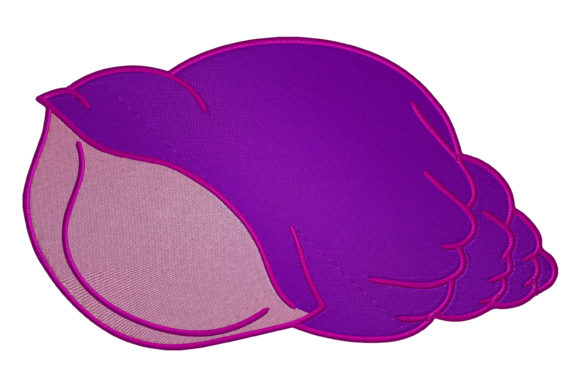
As an embroidery designer who’s prepped over 200 craft fair booths—and shipped thousands of digital embroidery files—I opened Shell expecting something literal. Instead, I got a design that feels both grounded and breezy: not cartoonish or overly detailed, but intentionally minimal with organic flow. It leans coastal-chic rather than tropical kitsch—think seaside cottage, not tiki bar. That’s gold for handmade markets. Customers scanning your booth don’t stop for “cute.” They pause for *feeling*: calm, thoughtful, quietly premium. Shell delivers that in under three seconds.
Where Shell Shines on Craft Fair Products
This isn’t a one-size-fits-all machine embroidery design—it’s a mood-setter with smart versatility. Here’s where it lands strongest:
- Tote bags: Embroidered centered on the front panel (4–5" wide), Shell reads as intentional, not busy. It balances well against natural canvas or oat linen—no competing patterns needed.
- Aprons: Perfect above the pocket or subtly on the bib. Its clean outline holds up beautifully on medium-weight cotton twill, and customers consistently comment on “how elegant” it looks—even on utilitarian pieces.
- Tea towel embroidery: Works best on flat-woven cotton or linen blends. Avoid highly textured towels—the stitch density may blur fine curves. On smooth fabric? Crisp, tactile, and instantly giftable.
- Embroidered patches: A standout. Cut-and-sew Shell patches add instant handmade credibility to denim jackets, market bags, or kids’ backpacks. The shape is stable, no fraying risk at edges.
- Pillow covers & small pouches: At 3–4", Shell becomes a quiet focal point—not overwhelming, not forgettable. Ideal for neutral palettes and boutique makers building cohesive collections.
What Holds It Back (and How to Work Around It)
No design is bulletproof—and Shell has gentle limitations worth honoring:
- Not for curved cap surfaces: The subtle contour of the shell doesn’t translate cleanly on high-crown baseball caps. Skip it for headwear unless you’re using a specialized cap hoop and ultra-light stabilizer.
- Avoid dense fabrics without testing: Thick sweatshirts or fleece can swallow delicate line work. Always run a test on scrap first—and consider simplifying thread colors to maximize contrast.
- Small sizes demand caution: Below 2.5", some curvature softens. It still reads as “shell,” but loses its sculptural nuance. For tiny appliqué or charm-sized items, stick to 3" minimum.
- Dark fabric needs strategy: Light thread on black or navy can fade visually. Use matte rayon or tonal metallics for depth—or go bold with ecru or seafoam for contrast that pops in person and online.
Selling Power: Why Shell Moves Product
In my booth, Shell-embroidered items consistently draw slower stops, longer holds, and higher conversion than busier motifs. Why? It feels *designed*, not downloaded. Customers sense intentionality—clean lines, balanced negative space, subtle texture from stitch direction. That perception lifts perceived value: a $28 tea towel feels like a $36 artisan piece; a $42 pillow cover reads as investment-grade, not impulse.
For Etsy sellers and small shop owners, Shell strengthens brand consistency. Pair it across three products—tote, apron, patch—and your shop tells a story: mindful, coastal-adjacent, quietly refined. No forced theme. Just cohesion.
At craft fairs, it also excels as a booth sample. Mounted on a raw-edge linen square or framed in a minimalist hoop, Shell invites touch. People lean in. They ask, “Is that hand-stitched?” That’s your opening to talk process, materials, and care—then close the sale.
Production Notes Every Embroidery Designer Should Run
Before cutting your first production run, do these six things:
- Test on scrap fabric—same weight, same dye lot, same finish as your final product.
- Check thread contrast in natural light *and* under your booth’s lighting. What reads well on screen may vanish under warm LED.
- Review spacing and stitch density in your embroidery software. Look for tight clusters that could pucker or cause thread breaks at scale.
- Confirm hoop size compatibility with your most-used machines. If it pushes 5x7", note that for batch planning.
- Match stabilizer to fabric texture: Tear-away for smooth cotton, cut-away for knits, and ultra-light mesh for lightweight linens.
- Create one real mockup—not just a printable mockup. Stitch it, press it, photograph it in situ. Does it look like the product you want to sell? If yes, you’re ready.
Final Thought: Shell Is a Quiet Anchor
In a market flooded with loud fonts, crowded motifs, and trend-chasing designs, Shell is refreshingly unhurried. It doesn’t shout. It breathes. That makes it ideal for makers who sell calm, quality, and quiet confidence—not clutter. As a Fish-category embroidery file, it avoids cliché while staying true to its roots. As a commercial embroidery asset, it’s repeatable, scalable, and emotionally resonant.
Just remember: always verify commercial licensing before selling finished products. And if you’re using Shell for Etsy listings or digital embroidery file bundles, pair it with clean, sunlit photography—natural light reveals its subtlety better than any studio flash.
For craft fair sellers, handmade shop owners, and creative entrepreneurs building real businesses—not just weekend projects—Shell isn’t just another embroidery file. It’s a reliable, mood-lifting, sales-supporting design asset. Use it with intention. Stitch it with care. Watch it sell.