Snowman is Love
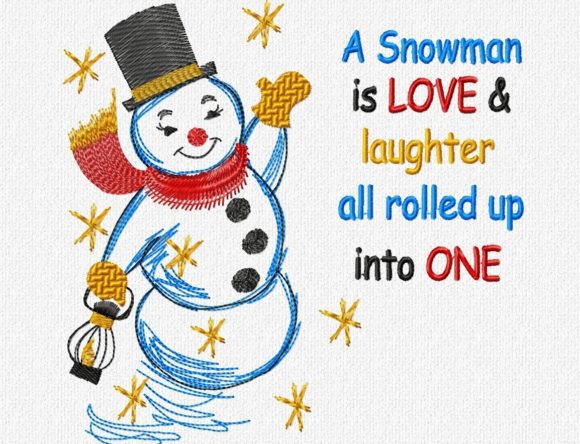
As a designer who’s stitched hundreds of holiday embroidery files for clients, small shops, and my own craft line, I opened Snowman is Love expecting charm—and got something more: quiet confidence. It’s not flashy. It doesn’t shout “Christmas!” with bells and glitter. Instead, it leans in—soft, rounded, gently whimsical—with a warmth that lands like a hug from someone who knows how to make joy feel safe.
I tested it first on a cream cotton-linen blend pillow cover for a local boutique’s holiday launch. The design stitched cleanly at mid-size (roughly 4.2" wide), with smooth satin-stitched outlines wrapping the snowman’s scarf and smile, balanced by airy fill stitches in the body and hat. No thread nesting. No skipped jumps. Just clean, consistent coverage—even in the tiny “O” of LOVE, which held its shape without looking cramped or pixelated. That detail matters: when you’re embroidering for baby onesies or children’s nightwear, legibility isn’t just cute—it’s functional. A parent should read “LOVE” at a glance while half-asleep during midnight comfort sessions.
Where Snowman is Love Feels Most Alive
This isn’t a design that fights for attention—it earns it through context. On a heavyweight organic cotton tote bag? Perfect. The rounded forms soften the rigidity of the fabric, and the phrase reads clearly even from three feet away. On a relaxed-fit sweatshirt in heather grey? It adds handmade sincerity without overwhelming the garment’s casual vibe. And on Christmas napkins or tea towels? It transforms utility into ritual—a small visual pause before dessert, a quiet nod to tenderness amid seasonal busyness.
It also works beautifully as an embroidered patch. I hooped a lightweight twill, used medium tear-away stabilizer, and stitched two versions—one with matte polyester thread, one with subtle variegated cotton. Both held up to light iron-on backing and passed the “tug test” (a quick pull at the edges to check for fraying or lifting). That’s critical for Etsy sellers bundling patches with iron-on instructions: buyers need reliability, not rework.
Real-World Considerations Before You Stitch
Texture matters. On terry cloth towels or fleece-lined baby blankets, I recommend adding a light cut-away stabilizer underneath—not just tear-away. The dense pile can swallow fine details, especially in the snowman’s twig arms or the curves of the “V.” Without extra support, those elements risk looking soft or indistinct.
Stretch changes everything. If you’re planning Snowman is Love for ribbed knit nightwear or baby bodysuits, test stitch density first. The file uses moderate fill stitch coverage—not overly dense, but not sparse either. On highly elastic fabrics, too much fill can cause puckering; too little risks a washed-out look. A quick sample on scrap knit, with basting stitches around the hoop edge, saves time later.
Dark fabric demands intention. The design relies on gentle contrast—not bold outlines—to define shape. On navy or charcoal, I switched from ecru to a warm off-white thread and added a layer of white water-soluble topping. It kept the snowman crisp without making the “LOVE” feel clinical. For black fabric, avoid stark white thread unless your brand leans graphic and modern; cream or oatmeal gives softer warmth.
What This Design Says About Your Work
When customers see Snowman is Love on a handmade product, they don’t just register a holiday motif—they register care. Not perfection, but thoughtfulness: the spacing between letters, the weight of the snowman’s base, the way the scarf curls just enough to suggest motion. That subtlety builds trust. A buyer choosing a personalized gift isn’t just buying embroidery—they’re buying reassurance that this item was made *for* feeling, not just function.
For craft businesses and Etsy sellers, that translates directly to perceived value. A $28 linen pillow with Snowman is Love stitched front-and-center sells differently than one with a generic snowflake. Why? Because it tells a micro-story: cozy, inclusive, quietly joyful. It fits nursery decor without being cutesy, holiday merchandise without being dated, and boutique branding without shouting.
Practical Designer Notes Before You Commit
- Always test on scrap fabric first—especially if stitching on textured, stretchy, or dark materials.
- Check thread color contrast in natural light and under indoor lighting. What reads softly in daylight may disappear under kitchen bulbs.
- Review stitch density visually, not just numerically. Dense fills can stiffen delicate garments; open fills may lack impact on coarse weaves.
- Confirm hoop size compatibility before prepping production runs—some versions of Snowman is Love may come in multiple sizes, and mixing them across products breaks visual consistency.
- Inspect small details like the inner curve of the “O” and the tip of the snowman’s carrot nose. These are where digitizing quality shows—or falters.
- Test in black-and-white mockups to assess silhouette strength. If it reads well without color, you’ve got a versatile design asset.
- Use proper stabilizer for your fabric type—not just what’s convenient. Skipping this step turns a lovely machine embroidery design into a frustrating re-hooping session.
- Verify licensing terms before selling finished items or bundling the embroidery file digitally. Commercial use rights aren’t automatic—even for holiday-themed files.
In short: Snowman is Love isn’t just another Christmas embroidery file. It’s a mood, a moment, a small piece of emotional resonance stitched into fabric. Used well, it elevates a custom apparel project into something memorable. Used thoughtfully, it becomes part of a brand’s quiet language—warm, human, and unmistakably handmade.